Rännakud algavad täistunnil / Viimane VR-tuur 1 h enne sulgemist
Tallinna Kunstihoone
Republic of Estonia and Five Fates
Talented Estonian artist Märt Laarman (1896-1979) From birth to death in his homeland
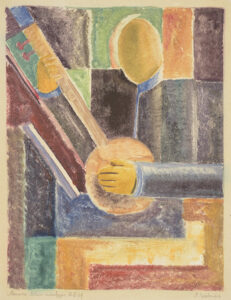
Märt Laarman was one of Estonia’s finest graphic artists and painters. He was characterized by a modernist style and was among the first to create cubist works. Cubism relied on geometric shapes and abandoned narrative content.
Märt Laarman is associated with the Tallinn Art Hall on Freedom Square, where he exhibited at its first show and was also a member of the commission that selected works for the exhibition.
Märt Laarman did not leave Estonia for exile but remained in Tallinn until the end of his life.
In 1951, Märt Laarman was expelled from the Artists’ Union for “creative inadequacy and passive attitude towards events organized by the Artists’ Union of the Estonian SSR”. However, his membership status was reinstated five years later. Persecution affected many of the artists, writers, and other creatives in Soviet Estonia during Stalin’s rule.
Later, Märt Laarman was declared an Honored Artist of the Estonian SSR. During the Soviet era, artists and writers experienced different fates and twists in life. Sometimes they were despised, and at other times they were valued.
Märt Laarman passed away in Tallinn in 1979 without seeing the independence of Estonia.
Märt Laarman. Music. 1929. Monotype. Estonian Art Museum. EKM j 44069 G 27168
Tallinn Art Hall
The Tallinn Art Hall in front of you was completed in 1934 according to the design by renowned architects Edgar Johan Kuusik and Anton Soans.
The Art Hall is one of the masterpieces of Estonian architecture in the functionalist style. Functionalism, as the name suggests, prioritized the purpose and function of the building above all else. Alongside the beauty of the building, it was crucial to consider who would use it and how. In the case of the Art Hall, large windows were incorporated to ensure that art could be appreciated to its fullest extent.
During its early days, the building appeared very modern, which led to the addition of sculptor Juhan Raudsepp’s statues “Labour” and “Beauty”.
Question
Find the differences at the Tallinn Art Hall compared to its condition in 1939. Access the 3D model of the Art Hall from 1939 in Augmented Reality.
Used to monitor number of Google Analytics server requests
10 minutes
__utmb
Used to distinguish new sessions and visits. This cookie is set when the GA.js javascript library is loaded and there is no existing __utmb cookie. The cookie is updated every time data is sent to the Google Analytics server.
30 minutes after last activity
__utmc
Used only with old Urchin versions of Google Analytics and not with GA.js. Was used to distinguish between new sessions and visits at the end of a session.
End of session (browser)
__utmz
Contains information about the traffic source or campaign that directed user to the website. The cookie is set when the GA.js javascript is loaded and updated when data is sent to the Google Anaytics server
6 months after last activity
__utmv
Contains custom information set by the web developer via the _setCustomVar method in Google Analytics. This cookie is updated every time new data is sent to the Google Analytics server.
2 years after last activity
__utmx
Used to determine whether a user is included in an A / B or Multivariate test.
18 months
_ga
ID used to identify users
2 years
_gali
Used by Google Analytics to determine which links on a page are being clicked
30 seconds
_ga_
ID used to identify users
2 years
_gid
ID used to identify users for 24 hours after last activity
24 hours
_gat
Used to monitor number of Google Analytics server requests when using Google Tag Manager
1 minute
Marketing cookies are used to follow visitors to websites. The intention is to show ads that are relevant and engaging to the individual user.